
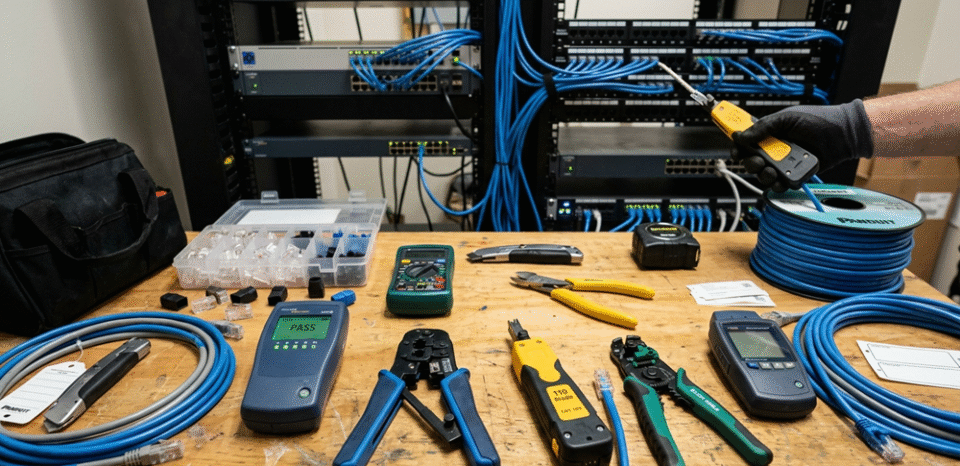
Ever wondered what separates a professional cable installation from a dodgy DIY job? Curious about which data cabling tools actually make a difference to your work quality? Whether you’re just starting out or looking to upgrade your toolkit, having the right equipment can transform your structured cabling projects from frustrating to seamless.
The truth is, quality data cable tools aren’t just nice to have—they’re absolutely essential. Using the wrong equipment leads to poor terminations, failed connections, and endless troubleshooting headaches. Plus, in Australia’s competitive market, clients expect professional results every single time. That means investing in reliable cable installation tools that deliver consistent performance.
In this guide, we’ll walk you through everything you need to know about building the perfect network cabling tools list. From cable cutters and strippers to testing equipment and management accessories, we’ve covered it all. You’ll discover which ethernet cable tools are worth the investment, learn what features to look for in crimping tools, and understand how to choose the right gear for your specific needs. Let’s get stuck into it.
Essential Cable Preparation Tools
Before you can terminate any cable, you need to prepare it properly. This is where your cable preparation tools come into play, and getting this stage right sets you up for success with every installation.
Cable Cutters and Strippers
A good pair of cable cutters is the foundation of any data cabling tools kit. You’ll want cutters with sharp, hardened steel blades that slice cleanly through cable jackets without crushing the internal conductors. Flush-cut designs work brilliantly for trimming excess wire close to connectors.
Cable strippers are equally important. Look for adjustable models that handle multiple cable sizes—this saves you from carrying several different tools. The best strippers remove the outer jacket without nicking the twisted pairs inside. Even tiny damage to conductor insulation can cause signal degradation and certification failures.
Cable Jackets and Sheath Removers
Dedicated sheath removers make quick work of removing outer jackets from Cat5e, Cat6, and fibre cables. These specialised tools feature rotating blades that score the jacket perfectly, allowing you to slide it off cleanly. Many professionals prefer ring-style removers for their precision and speed.
What Tools Do I Need to Cut and Strip Network Cables?
At minimum, you’ll need a quality cable cutter, an adjustable stripper, and a sheath remover. Many ethernet cable tool kits bundle these together, which offers excellent value. For professional work, consider investing in ratcheting cutters—they require less hand strength and produce cleaner cuts, especially when you’re working through dozens of cables daily.
Crimping Tools for Data Cable Installation
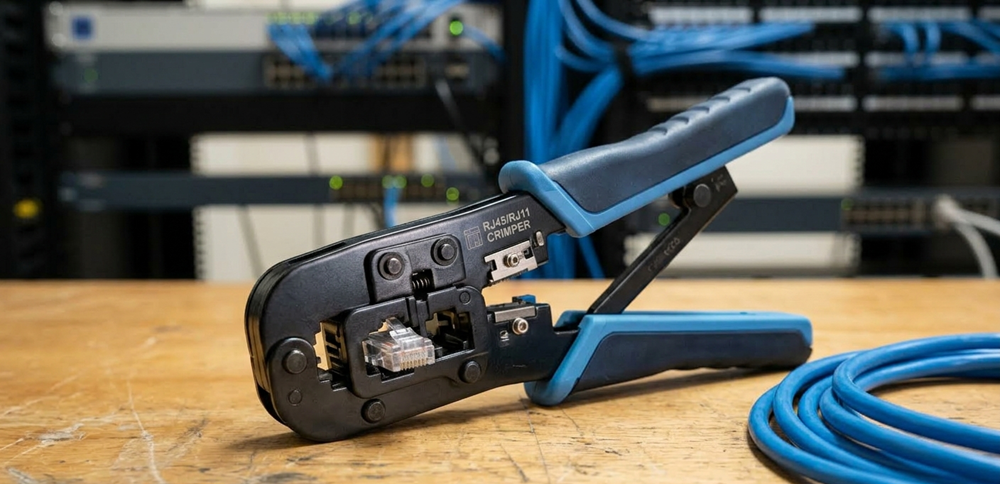
Your data crimping tool is arguably the most important item in your kit. A poorly crimped connector causes intermittent connections, slow speeds, and frustrated clients. Let’s break down what you need to know.
Ethernet Crimping Tool Essentials
A quality Ethernet crimping tool applies consistent pressure to seat connector pins properly into cable conductors. Look for tools with comfortable grips—you’ll be squeezing them hundreds of times per job. Ratcheting mechanisms are fantastic because they won’t release until full pressure is applied, ensuring every crimp meets specifications.
Cat6 Crimping Tool vs Cat5e: Which Do You Need?
Here’s the thing—Cat6 cables have tighter specifications than Cat5e. While many network cable crimping tools handle both, dedicated Cat6 crimping tools often provide better results for higher-category cables. The conductor spacing differs slightly, and a precise Cat6 cable crimping tool accounts for this.
If you’re primarily working with Cat6 or Cat6A installations, invest in a tool specifically designed for these cables. However, if your work spans multiple cable categories, a quality universal LAN cable crimping tool handles everything from Cat5e through Cat6A.
Network Cable Crimping Tool Features to Look For
When shopping for an Ethernet cable crimping tool, prioritise these features:
- Ratcheting mechanism for consistent crimp pressure
- Built-in cable cutter for convenience
- Wire stripper integration to streamline your workflow
- Comfortable ergonomic grips for extended use
- Die compatibility with pass-through and standard RJ45 connectors
How Do I Choose the Right Data Crimping Tool?
Consider your typical workload first. Occasional home installations? A mid-range tool works fine. Professional installer handling commercial projects daily? Invest in a premium crimping tool with replaceable dies and a lifetime warranty. The upfront cost pays off through reliability and longevity.
Termination and Punch-Down Tools
Beyond crimping connectors, you’ll need tools for terminating cables at patch panels and wall outlets. This is where punch-down tools become essential.
Impact Punch-Down Tools
Impact punch-down tools use spring-loaded mechanisms to seat conductors into IDC (Insulation Displacement Contact) terminals. They simultaneously trim excess wire, making terminations quick and tidy. Adjustable impact settings let you work with different terminal types without damaging delicate components.
Keystone Jack Termination Tools
Keystone jacks require proper seating of conductors into their terminals. While impact tools work for many jacks, some manufacturers provide specialised termination tools designed for their specific products. Using the correct tool ensures proper contact and reliable connections.
What Is the Best Tool for Terminating Ethernet Cables?
For most structured cabling work, a quality impact punch-down tool with interchangeable blades covers your needs. Popular options include tools compatible with 110- and 66-block terminations. Pair this with a good lan cable tool for connector crimping, and you’re ready for virtually any termination scenario.
Testing and Certification Equipment
Installing cables is only half the job—you need to verify everything works correctly. Testing equipment ranges from basic continuity checkers to full certification units.
Cable Testers and Continuity Checkers
Basic cable testers verify that all eight conductors connect properly from end to end. They detect opens, shorts, and miswires quickly. These affordable networking tools belong in every installer’s kit, regardless of experience level.
Network Cable Certifiers
For commercial installations requiring documentation, cable certifiers provide detailed reports showing that cables meet industry standards. They test parameters like crosstalk, return loss, and signal-to-noise ratios. While expensive, they’re essential for professional cable installer tool collections.
Tone Generators and Probe Kits
When tracing cables through walls and ceilings, tone generators prove invaluable. Connect the generator to one end, then use the probe to locate that specific cable among dozens of others. This simple data tool saves hours of frustration during troubleshooting.
Do I Need a Cable Tester for Structured Cabling?
Absolutely. Even basic testing catches mistakes before they become expensive problems. For professional work, certification equipment demonstrates compliance with standards—something commercial clients increasingly require.
.jpg)
Cable Management and Installation Accessories
Proper cable management separates amateur installations from professional ones. These accessories keep your work organised and maintainable.
Fish Tapes and Cable Pullers
Getting cables through walls, ceilings, and conduits requires fish tapes or cable pullers. Fibreglass fish tapes work well in conduits, while steel versions handle longer runs. Glow rods illuminate dark ceiling spaces, making cable routing significantly easier.
Cable Ties, Velcro Straps, and Labelling Systems
Organisation matters. Cable ties secure bundles neatly, though many professionals prefer Velcro straps for their reusability. Labelling systems—whether printed labels or wrap-around markers—make future maintenance straightforward.
Structured Cabling Management Software Overview
Modern structured cabling management software helps track installations, document cable runs, and manage maintenance schedules. For larger organisations, this software proves invaluable for asset management and troubleshooting.
Building Your Network Cabling Tools List
Whether you’re starting fresh or upgrading your collection, here’s what to include in your network cabling tools list.
Starter Toolkit for Beginners
Begin with these essentials: cable cutters, strippers, a quality crimping tool, a basic cable tester, and a punch-down tool. Add a small selection of cable ties and labels. This foundation handles most residential and small business installations.
Professional Cable Installer Tools Checklist
Professionals need everything above, plus certification equipment, tone generators, multiple crimping dies, specialised fibre tools, and comprehensive organisation accessories. Invest in commercial-grade computer cabling tools designed for daily use.
What Tools Do Professional Data Cablers Use in Australia?
Australian professionals typically carry comprehensive kits that include Fluke or similar-brand testing equipment, professional-grade crimping tools from manufacturers like Platinum Tools, and specialised cable tools for both copper and fibre installations. Quality matters in our harsh climate—tools must withstand heat, dust, and demanding conditions.
.jpg)
Investing in the Right Data Cable Tools
Building the perfect collection of data cabling tools takes time and investment, but it’s worth every dollar. Quality cable tools deliver consistent results, reduce callbacks, and make your work more efficient. Cutting corners on equipment ultimately costs more through failed installations and frustrated clients.
Remember, your networking tools are an investment in your professional data cabling tools. Start with the essentials—good cutters, a reliable ethernet crimping tool, and basic testing equipment. As your skills and client base grow, expand your collection with certification equipment and specialised accessories.
Ready to upgrade your toolkit? Focus on quality over quantity, choose tools appropriate for your typical projects, and don’t forget about proper maintenance. Clean, well-maintained cable installation tools last years and consistently deliver professional results. Your future self—and your clients—will thank you for making smart investments now.