
Asbestos was once a popular building material in Australia because of its strength and fire_resistance. Today we know that the tiny fibres can cause serious health problems when they become airborne. If you own a home, run a business, or manage a property, understanding the process of asbestos inspection and removal is essential for safety and compliance. This guide walks you through every stage, from spotting potential asbestos to hiring a licensed contractor, while keeping Australian regulations and local nuances front and centre.
Why Asbestos Inspection and Removal Matters in Australia
Across the country, thousands of homes and commercial buildings still contain asbestos_containing materials (ACMs). The Australian government classifies asbestos as a hazardous substance, and the Work Health and Safety (WHS) legislation makes it illegal to disturb asbestos without a licensed professional. Failing to conduct a proper asbestos inspection and removal can lead to:
- Serious health risks such as mesothelioma, lung cancer, and asbestosis.
- Heavy fines and legal action under the WHS Act and state_specific regulations.
- Reduced property value and difficulty selling or renting.
- Insurance complications if the asbestos is not declared.
Because of these stakes, a thorough asbestos inspection and removal plan is not optional – it’s a legal and health_driven necessity for every Australian property owner.
Understanding Australian Regulations
National Framework
The national backbone for asbestos management is the Work Health and Safety Act 2011 and the Safe Work Australia model WHS regulations. These set out the duties of employers, owners, and workers to identify, assess, and control asbestos risks. Key points include:
- All asbestos work must be carried out by a licensed asbestos removalist.
- Asbestos registers are required for workplaces with known ACMs.
- Air monitoring and clearance testing must be performed after removal.
State and Territory Requirements
While the national framework is consistent, each state and territory adds its own rules. Below is a quick snapshot for the most populated regions:
- New South Wales (NSW) – The Work Health and Safety Regulation 2017 requires a licensed asbestos assessor to produce a written report before any removal.
- Victoria (VIC) – The Occupational Health and Safety Act 2004 mandates a detailed asbestos management plan for all commercial properties.
- Queensland (QLD) – The Work Health and Safety Regulation 2011 includes a specific “Asbestos Removal Licence” category.
- Western Australia (WA) – The Occupational Safety and Health Act 1984 requires a “Class A” licence for high_risk removal.
- South Australia (SA), Tasmania (TAS), Northern Territory (NT), and Australian Capital Territory (ACT) – Follow similar licensing and notification rules, with slight variations in notification periods.
Knowing which jurisdiction your property falls under helps you choose the right licensed professional and avoid costly compliance errors.
Step_by_Step Process for Asbestos Inspection and Removal
1. Initial Visual Survey
A qualified asbestos inspector begins with a visual walk_through. They look for common ACMs such as:
- Corrugated roofing sheets.
- Floor tiles and backing boards.
- Ceiling tiles and pipe insulation.
- Fire_proofing spray and cement pipe.
The inspector notes the location, condition, and suspected type of asbestos. This stage does not involve sampling—only observation.
2. Sampling and Laboratory Analysis
If the visual survey suggests possible asbestos, the inspector collects small samples using a sealed, wet_method technique to prevent fibre release. The samples are sent to an accredited laboratory for analysis under the Australian Standard AS 2601_2001.
3. Written Asbestos Report
A comprehensive report follows, containing:
- Exact locations of ACMs.
- Type and concentration of asbestos (e.g., chrysotile, amosite, crocidolite).
- Condition rating (good, fair, poor).
- Recommended actions – either leave in place with management or remove.
The report is the legal foundation for any subsequent asbestos inspection and removal work.
4. Developing an Asbestos Management Plan (AMP)
For properties where ACMs will remain, an AMP outlines how to monitor, maintain, and safely manage the material. It includes:
- Regular inspection schedules.
- Control measures such as encapsulation or enclosure.
- Emergency response procedures.
5. Choosing a Licensed Asbestos Removalist
When removal is the chosen route, you must hire a licensed asbestos removalist. In Australia, licences are issued by state authorities (e.g., SafeWork NSW, WorkSafe Victoria). Look for:
- Valid Class A or B licence, depending on the risk level.
- Evidence of recent training and competency.
- Insurance coverage for asbestos work.
- Positive reviews from local homeowners or businesses.
6. Preparing the Site
Before removal begins, the contractor will:
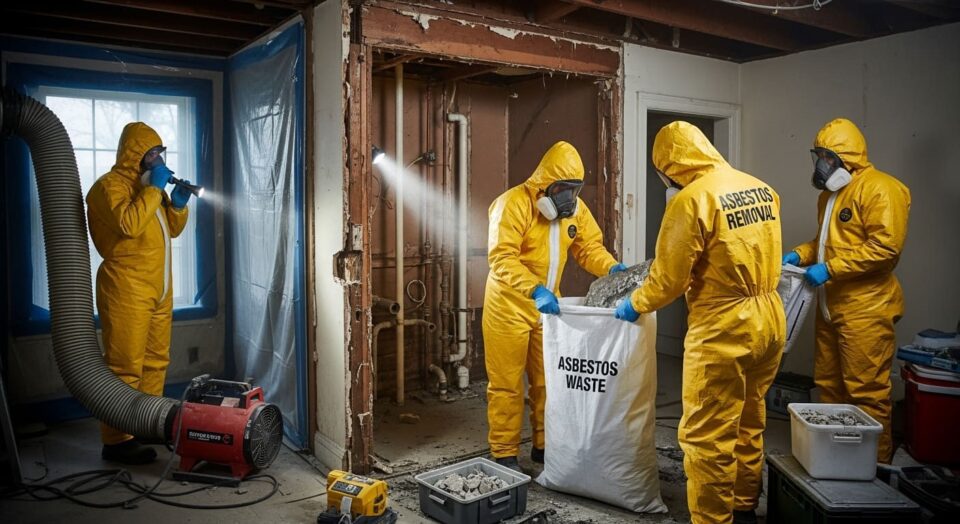
- Isolate the work area with sealed barriers and negative pressure units.
- Set up decontamination chambers for workers.
- Notify the relevant state authority, if required (e.g., NSW SafeWork).
7. The Removal Process
During removal, licensed professionals use:
- HEPA_filtered vacuum systems.
- Wet methods to keep fibres from becoming airborne.
- Personal protective equipment (PPE) such as respirators and disposable suits.
All waste is double_bagged, labelled, and transported to an approved hazardous waste facility.
8. Air Monitoring and Clearance Testing
After removal, an independent assessor conducts air monitoring to confirm that fibre levels are below the safe threshold (0.01 fibre/ml). A clearance certificate is issued only when the area passes the test.
9. Final Documentation and Handover
The contractor provides a complete file that includes:
- Removal licence details.
- Waste transport receipts.
- Air monitoring results and clearance certificate.
- Updated asbestos register or AMP.
Keep these documents for future owners, insurers, and regulators.
Local Providers and Competitive Landscape
Australia has a robust market of asbestos specialists. In major cities, you’ll find both national chains and local family_run firms. Some of the common providers include:
- Licensed removalists operating in Sydney, Melbourne, Brisbane, Perth, and Adelaide.
- Regional specialists serving towns in the Hunter Valley, Gippsland, and the Gold Coast.
- Online platforms that match homeowners with vetted contractors.
When comparing quotes, consider:
- Licence class and expiration date.
- Inclusion of air monitoring and clearance testing.
- Transparent waste disposal fees.
- Customer testimonials from Australian homeowners.
Common Misconceptions About Asbestos Inspection and Removal
- “If the asbestos looks intact, it’s safe.” Even undamaged ACMs can release fibres if disturbed.
- “DIY removal saves money.” Doing it yourself is illegal without a licence and can lead to health hazards and fines.
- “All asbestos is the same.” Different fibre types have varying health risks and require specific handling.
- “Only old houses have asbestos.” Newer renovations may have used asbestos_containing products, especially in the 1970s_80s.
Questions and Answers: Common Questions About asbestos inspection and removal in Australia
Below are the most frequently asked questions by Australian homeowners and business operators. Each answer is concise, practical, and grounded in local regulations.
- Do I need a licence to inspect for asbestos?
No. A licensed asbestos assessor is not required for a visual survey, but a qualified inspector must hold a recognised asbestos assessor certificate to issue a formal report. This ensures the report meets Safe Work Australia standards.
- How much does a full asbestos inspection and removal cost in Australia?
Costs vary by state, property size, and the amount of asbestos. A typical residential inspection ranges from $300 to $600. Removal can cost anywhere from $30 to $80 per square metre, including disposal and clearance testing. Always request a detailed quote that itemises each service.
- What should I do if I find asbestos after buying a house?
Notify your insurer and a licensed asbestos removalist immediately. In most states, you must also inform the local council. The removalist will create a removal plan, obtain the necessary licences, and manage the safe disposal of the material.
- Are there any government grants or rebates for asbestos removal?
Some state governments offer low_interest loans or rebates for households undertaking asbestos removal, especially for low_income families. Check the NSW SafeWork website, Victoria’s WorkSafe portal, or your local council for current programs.
- How long does the entire asbestos inspection and removal process take?
A visual survey and report can be completed within a week. Sampling and lab analysis add another 5_10 business days. If removal is required, the timeline depends on the scope—small residential jobs may finish in 2_3 days, while larger commercial projects can take several weeks.
Key Checklist for Homeowners
Before you start any work, run through this quick checklist to ensure you’re fully prepared.
- Identify the state or territory jurisdiction.
- Hire a licensed asbestos inspector and obtain a written report.
- Decide whether to manage in place or remove the ACMs.
- If removing, select a licensed asbestos removalist with a valid Class A/B licence.
- Confirm that the contractor will conduct air monitoring and provide a clearance certificate.
- Keep all documentation for future resale or insurance purposes.
Conclusion: Your Path to a Successful asbestos inspection and removal in Australia
Navigating asbestos inspection and removal in Australia may feel daunting, but following the right steps protects your health, your family, and your investment. Start with a qualified visual survey, let a certified assessor confirm the presence of asbestos, and then decide on a management or removal strategy that complies with national and state regulations. Choose a licensed removalist, ensure proper site preparation, and never skip the final air monitoring and clearance testing. By keeping thorough records and staying informed about local rules, you’ll avoid legal pitfalls and create a safer environment for everyone who steps inside your property. Take the first step today—schedule an inspection and set the foundation for a healthy, compliant future.