
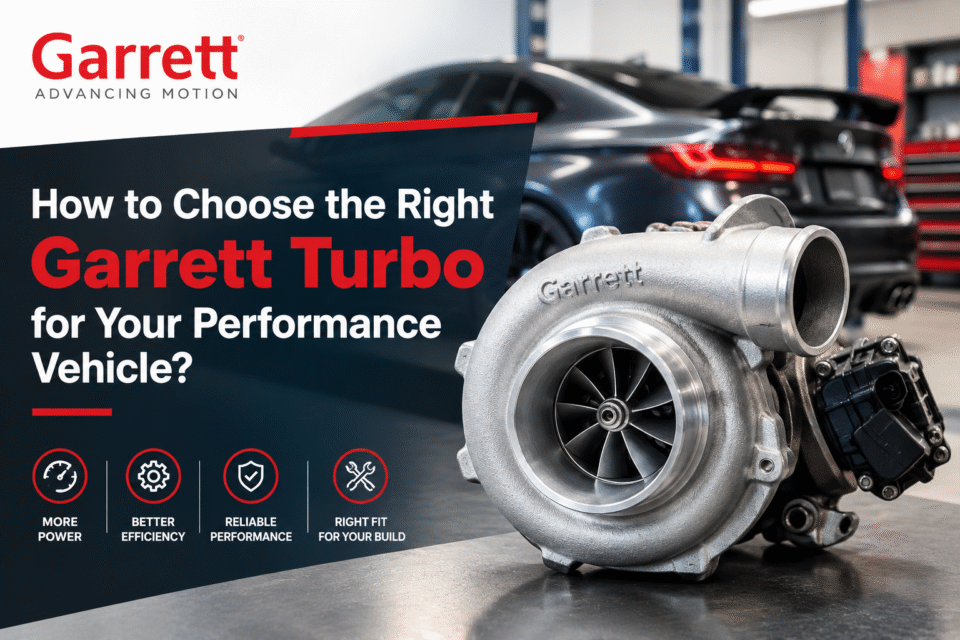
Ever wondered why some turbocharged cars feel incredibly responsive while others seem sluggish off the line? Have you been scrolling through forums at 2 AM, trying to figure out which turbo will actually suit your build? You’re definitely not alone. Choosing the right turbocharger can feel overwhelming, especially when you’re bombarded with technical jargon about A/R ratios, compressor maps, and bearing types.
Here’s the thing – your turbocharger choice genuinely matters. It’s not just about slapping on the biggest turbo you can find and calling it a day. The right turbo transforms your driving experience, delivering power exactly when you need it. The wrong one? Well, that leads to frustrating lag, poor drivability, and potentially expensive engine damage.
In this guide, we’ll break down everything you need to know about selecting a Garrett turbocharger for your performance vehicle. We’ll cover the basics of how turbos work, help you understand sizing, explore different Garrett options for various applications, and discuss the supporting modifications you’ll need. Whether you’re building a street-driven daily, a weekend track warrior, or a diesel workhorse, you’ll walk away knowing exactly what to look for. Let’s get stuck into it.
What Is a Garrett Turbo and Why Is It So Popular?
Garrett has been in the turbocharger game since the 1950s, originally developing units for aircraft before transitioning to automotive applications. They’ve supplied turbos to countless OEM manufacturers and have earned a reputation for reliability and performance. When you see a Garrett badge, you know you’re getting decades of engineering expertise.
What Makes Garrett Turbos Stand Out from the Competition?
What sets Garrett apart is their consistent quality and extensive range. They manufacture everything from small, responsive units perfect for four-cylinder engines to massive turbos capable of supporting 2000+ horsepower builds. Their research and development is second to none, and they’ve pioneered technologies like ball bearing cartridges that have become industry standards.
Plus, Garrett turbos come with proper warranty coverage and excellent technical support. This matters when you’re investing serious money into your build. Cheap alternatives might save you cash upfront, but they often fail prematurely and lack any meaningful backup.
.png)
Understanding Turbocharger Basics Before You Buy
How Does a Turbocharger Work?
A turbocharger is essentially an air pump driven by exhaust gases. Hot exhaust spins a turbine wheel, which is connected to a compressor wheel via a shaft. The compressor sucks in ambient air, compresses it, and forces it into your engine. More air means you can add more fuel, resulting in bigger combustion and more power.
Key Components of a Turbo System
Your turbo system includes the turbocharger itself, an intercooler to cool the compressed air, piping to connect everything, a wastegate to control boost pressure, and sometimes a blow-off valve to release pressure between shifts. Each component plays a vital role, and they all need to work together harmoniously.
Single Turbo vs Twin Turbo: Which Is Right for You?
Single turbo setups are simpler, cheaper, and easier to tune. They’re brilliant for most applications. Twin turbo configurations, whether parallel or sequential, can offer better response and higher power potential but add complexity and cost. For most enthusiasts, a properly sized single turbo delivers everything you need.
How Do I Know What Size Turbo I Need?
Matching Turbo Size to Engine Displacement
This is where many people go wrong. Your engine’s displacement, volumetric efficiency, and target power all influence turbo sizing. A 2.0-litre engine making 300kW needs a very different turbo than a 4.0-litre making the same power. Garrett’s online turbo calculator is incredibly helpful here.
Understanding Compressor Maps and Flow Rates
Compressor maps show you where a turbo operates efficiently. You want your operating point sitting in the middle of the efficiency island, not near the surge line or choke boundary. This ensures your turbo performs optimally at your target boost and airflow levels.
The Importance of A/R Ratios Explained Simply
The A/R (Area/Radius) ratio affects spool characteristics and flow capacity. A smaller A/R spools faster but restricts top-end power. A larger A/R takes longer to spool but flows better at high RPM. Finding the right balance depends on your priorities – street response or outright power.
What Garrett Turbo Is Best for My Car?
Garrett Turbos for Daily Drivers and Street Performance
For street-driven cars, look at Garrett’s G-Series turbos like the G25 or G30. These feature modern aerodynamics and ball bearing cartridges for excellent response. They spool quickly and make daily driving enjoyable rather than frustrating.
Garrett Turbos for Track Days and Motorsport Applications
Track-focused builds can handle more lag in exchange for top-end power. The G35 and larger G-Series turbos excel here, offering massive flow capacity while still maintaining reasonable response. Your specific power targets and RPM range will guide the final selection.
Garrett Turbos for Diesel Performance Vehicles
Diesel applications require turbos designed for higher exhaust temperatures and different flow characteristics. Garrett’s PowerMax and performance diesel range caters specifically to these needs, offering improved response and power over stock units.
Is a Bigger Turbo Always Better?
The Trade-Off Between Lag and Top-End Power
Absolutely not. Bigger turbos make more peak power but sacrifice low-end response. If your turbo doesn’t spool until 5000 RPM, your car will feel gutless around town. You’ll constantly be waiting for boost to build, which gets old quickly.
When a Smaller Turbo Makes More Sense
A smaller turbo that spools at 3000 RPM and delivers strong mid-range torque is far more usable for most drivers. You’ll feel faster in real-world conditions, even if peak power numbers are lower. Match your turbo to how you actually drive.
Ball Bearing vs Journal Bearing Turbos
Spool Time and Responsiveness
Ball bearing turbos spool significantly faster – often 15% quicker than journal bearing equivalents. This improved response comes from reduced friction in the cartridge. For street applications, ball bearings are well worth the extra investment.
Durability and Maintenance Considerations
Journal bearing turbos are slightly more tolerant of poor oil conditions but require more frequent maintenance. Ball bearing units are more sensitive to oil quality but are generally more durable when properly maintained. Both last well with correct care.
Supporting Modifications You’ll Need
Fuel System Upgrades
Your stock fuel system won’t support significantly increased airflow. Larger injectors, an upgraded fuel pump, and possibly upgraded fuel lines are essential. Running lean under boost destroys engines quickly.
Intercooler and Piping Requirements
Compressed air gets hot, and hot air makes less power while increasing knock risk. A quality intercooler keeps intake temperatures manageable. Properly sized piping ensures minimal boost leaks and pressure drops.
ECU Tuning and Engine Management
A professional tune is absolutely non-negotiable. Your ECU needs to know about the increased airflow, adjust fuelling accordingly, and manage boost pressure safely. Never run an upgraded turbo without proper tuning.
Can I Install a Garrett Turbo Myself?
If you’re mechanically competent and have proper tools, DIY installation is achievable. However, turbo installations involve exhaust work, oil and coolant plumbing, and precise fitment. Any mistakes can cause catastrophic failure. Many enthusiasts complete the physical installation themselves but leave tuning to professionals.
.png)
Common Mistakes to Avoid
Don’t oversize your turbo chasing dyno numbers you’ll never use. Don’t skip supporting modifications – they’re called supporting for a reason. And definitely don’t buy cheap knock-off turbos. Counterfeit units fail unpredictably and can cause serious engine damage.
Making the Right Choice for Your Performance Goals
Choosing the right Garrett turbo comes down to honestly assessing your needs. Think about how you actually use your car, what power levels are realistic for your engine, and how much you’re willing to invest in supporting modifications. A well-matched turbo system transforms your driving experience.
Remember, the best turbo isn’t necessarily the biggest or most expensive. It’s the one that delivers power when you need it, suits your driving style, and works harmoniously with your other modifications. Take your time with this decision – your engine will thank you.
Ready to start your turbo journey? Reach out to a reputable Garrett dealer, have an honest conversation about your goals, and get ready for some seriously fun driving. The boost life awaits.