
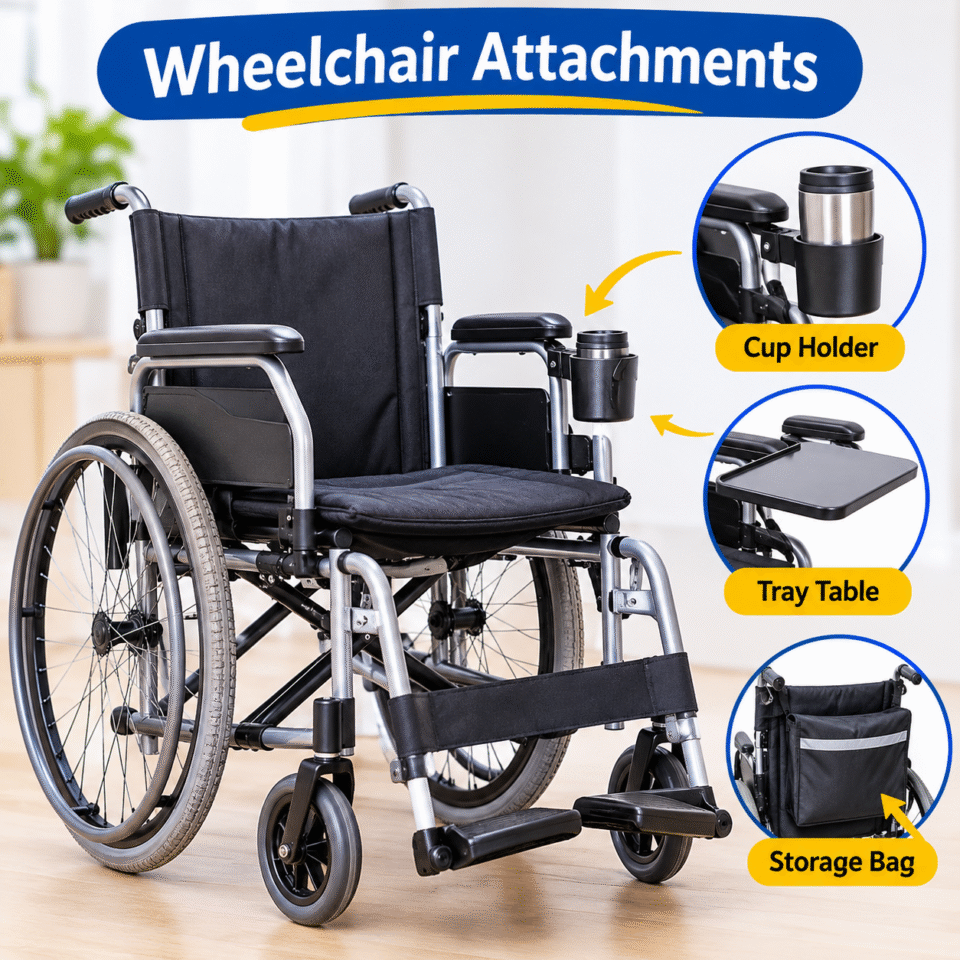
Let’s be honest: a wheelchair can really turn into a mobile junk drawer if you’re not careful. Keys, phone, wallet, a bottle of water, maybe a hat for the glaring Aussie sun. You end up juggling stuff on your lap, & that’s both annoying & unsafe! That’s where the right add‑ons come in! You don’t need to buy a whole new chair, just a few smart extras that make your daily trips feel a lot less cluttered.
Staying Organised On The Move
Start with the basics. A simple cup holder that clips onto the push handle or armrest is a game changer on a hot day. Look for one that holds a standard drink bottle or takeaway coffee cup snugly, because nobody wants a flat white spilling over their trousers. Then think about a small bag or pouch that attaches to the side of the seat.
A Compact, Weather‑Resistant Pouch Can Easily Carry
Your phone, keys, & a snack without bulging. And if you use a walking stick or an umbrella, there are clips & holders designed to keep those upright & out of the way, which explains why careful buyers treat any decision about wheelchair attachments as something to research rather than rush. You’ll be amazed how much easier it’s to wheel yourself when your hands are free & your lap is quite clear.
Easily Jolt Everything Around
Now, Australian weather is a whole other story. When it’s bucketing down, you want a rain cover that fits over your legs, but you also need to keep your accessories dry. Some bags come with a water‑resistant coating, but it’s worth checking the zips & seams before you rely on them. On the flip side, in the heat, your phone might easily overheat if it’s trapped in a black pouch.
So, choose lighter colours or materials that don’t soak up the sun! Also, keep in mind that rough footpaths & uneven kerbs can easily jolt everything around. Make sure any attachment is securely fastened with strong straps or brackets, & test it out on a short run before you head out for the day, & it’s the kind of detail that often separates a good result from a disappointing one when you invest in wheelchair attachments.
Check The Weight Limit Of Any Bag
- Or holder, so you don’t overdo it.
- Use a lanyard or tether for smaller items like keys or a phone.
- Look for attachments that are pretty simple to clip on & off, in case you need to fold your chair.
Finally, don’t forget that a little planning goes a long way. When you’re thinking about what to attach, imagine your typical day! If you’re heading to the shops, you might easily want a larger bag! If you’re just popping to the café, a simple cup holder & a small phone mount might be enough. The best approach is to start with one or two items that solve your biggest problem, then add more as you get used to them, which ties directly back to how you should really judge wheelchair attachments in the first place.
It’s surprising how much these small accessories can easily change your comfort & confidence. And remember, the goal is to make your chair work for you, not the other way around. So take your time, try a few options, & find what feels right!
Adding Electric Assist For Hills And Long Trips
Manual wheelchairs are really great for getting around, but they get heavy fast when you hit an incline. Australian towns are rarely flat, & even a gentle slope can really turn a short ride into a workout, and that context makes the wider picture around wheelchair attachments much easier to read. That’s why more people are adding electric power to their chairs. You don’t have to switch to a full power wheelchair! You just add a small motor that works with your arms, not instead of them.
There are a few main styles. Some fit onto the front of the chair & pull you along. Others replace the rear wheels with motorised hubs. Both work by sensing when you push! The more force you put through the wheels, the more help you get. You still steer & brake normally, & you can really turn the power off whenever you want to freewheel. Top speeds are usually capped at around 6 to 10 kilometres per hour, depending on the model & your local rules, a factor that quietly shapes the long‑term results you get from wheelchair attachments. That keeps you safe on footpaths & means you don’t need a driver’s licence to use one.
Before You Buy, Think About The Weight
Of the add‑on. Some units add a few kilograms to your chair, which can easily affect how simple it’s to lift in & out of a car, which is why it pays to read the fine print before you commit to wheelchair attachments. Battery range matters too. A small battery might easily give you 10 kilometres, while a bigger one can really double that. But bigger batteries weigh more & take longer to charge! You’ll also want to check that your frame can often handle the mounting hardware. Most chairs work, but some need special brackets or a professional fitting! It’s worth getting a trial before you commit, especially if you’re buying online.
Grass Gravel Cracked Concrete
Maintenance is pretty straightforward. Keep the motor area clean & dry & wipe down the connectors every now & then. You’ll need to charge the battery regularly, even if you don’t ride every day! Spare batteries are handy if you travel a lot! In Australia, you might be able to get funding for these wheelchair attachments through the NDIS, but you’ll need to show how they help you meet your goals. An occupational therapist can easily help with the paperwork & recommend a model that suits your needs. And if you can, test ride on the same types of surfaces you face daily. Grass, gravel & cracked concrete all feel very different under power help. Here are a few things to check when comparing options.
Battery life per charge & charging time. Total added weight & how it affects your chair’s balance. Whether the unit can be removed easily for travel. Warranty & service support in Australia! Noise level, because some motors are much quieter than others.
Electric help won’t fix every terrain problem, but it gives you more independence. You’ll feel less tired after a long day out, & you’ll have more energy for the things that actually matter & keeping that in view makes every conversation you’ve about wheelchair attachments noticeably more productive. Just remember to take it slow at first & get used to the extra push. Once you do, you might easily wonder how you ever managed without it!
Conclusion And What Matters
There’s no single trick behind wheelchair attachments, just a handful of sensible choices. Come back to the sections above whenever a detail slips your mind! Take your time, weigh each option against your own situation, & don’t let anyone rush you. Where will often you start?