
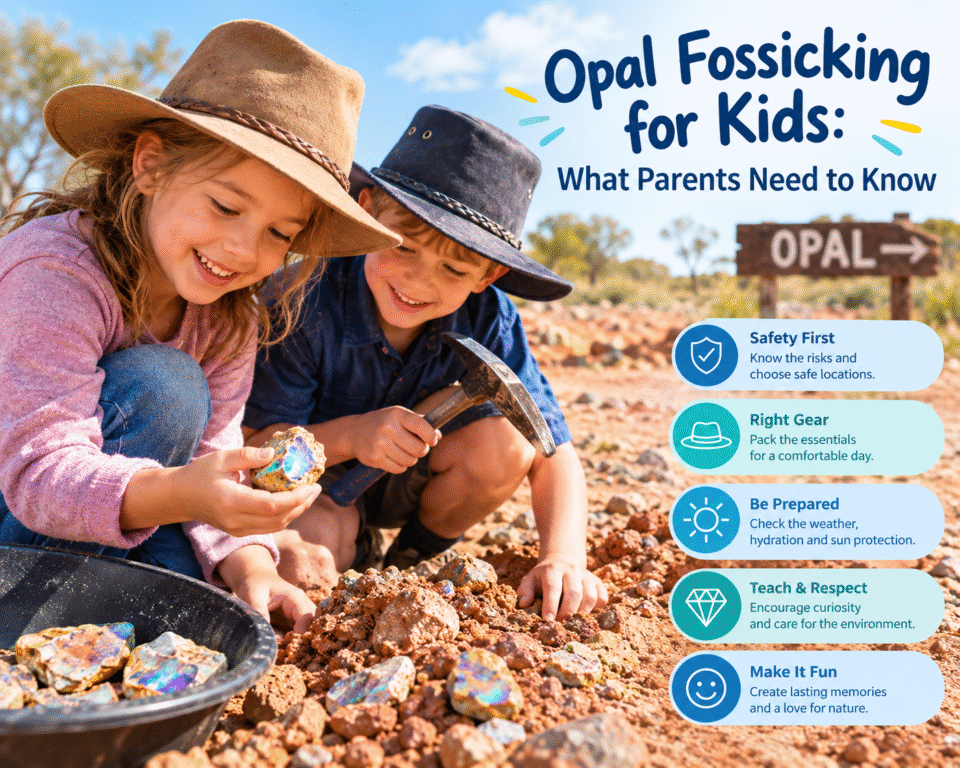
What if they could dig through ancient earth and discover genuine gemstones hidden for millions of years? Opal fossicking offers exactly that kind of adventure, and it’s becoming increasingly popular with Australian families looking for unique outdoor experiences.
Opal fossicking is essentially the recreational search for opals in designated areas across Australia. It combines the thrill of discovery with outdoor exploration, making it an ideal activity for curious young minds. The outback locations where opals are found offer stunning landscapes that feel worlds away from everyday life, creating memories that last a lifetime.
In this guide, we’ll cover everything you need to know before taking your family on an opal fossicking adventure. From the best locations and age-appropriate activities to safety considerations and essential gear, you’ll find all the information required to plan a successful trip. We’ll also look at licensing requirements, costs, and practical tips for keeping kids engaged throughout the experience.
What Is Opal Fossicking and Why Is It Perfect for Kids?
The Basics of Fossicking Explained
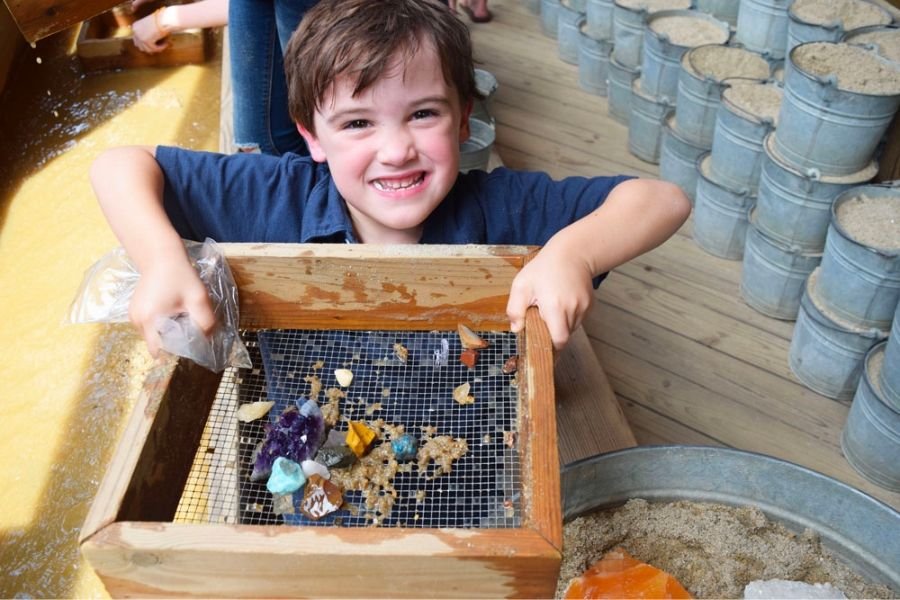
Fossicking is the recreational search for minerals, gemstones, and other natural treasures. When it comes to opals, this typically involves sifting through mullock heaps (the waste material from mining operations) or searching designated areas where opals might be found near the surface.
Opal fossicking for kids is a fun, educational activity that allows children to explore nature, learn about gemstones, and enjoy an exciting family adventure. Unlike commercial mining, fossicking is designed for hobbyists and families. You don’t need expensive equipment or years of experience. Basic tools like a small pick, sieve, and bucket are often sufficient to get started. Many fossicking areas provide equipment hire, making it even easier for first-timers.
Why Children Love the Treasure Hunt Experience
There’s something magical about the possibility of finding hidden treasure. Kids are naturally drawn to digging, exploring, and discovering things. Opal fossicking taps into this innate curiosity perfectly.
The unpredictable nature of fossicking keeps children engaged. Every scoop of dirt could contain something special. Plus, opals themselves are genuinely fascinating—their colours shift and shimmer in the light, making any find feel incredibly rewarding.
Best Places to Take Kids Opal Fossicking in Australia
Lightning Ridge, New South Wales
Lightning Ridge is famous for producing black opals, considered among the world’s most valuable. The town offers several family-friendly fossicking areas, including the Walk-In Mine and various public fossicking spots. Many local operators cater specifically to families with young children.
Coober Pedy, South Australia
Known as the opal capital of the world, Coober Pedy offers a truly unique experience. The underground homes and museums add extra intrigue for kids. Several tourist mines let families try their luck in a safe, supervised environment.
White Cliffs, New South Wales
White Cliffs provides a more relaxed atmosphere compared to larger towns. The landscape is stunning, and the community welcomes families warmly. It’s an excellent choice for those wanting a quieter fossicking experience.
Family-Friendly Fossicking Parks and Tourist Mines
If you’re new to fossicking, tourist mines and designated parks offer the safest introduction. These locations often pre-seed their areas with opals, increasing the chances of children finding something. While purists might prefer natural fossicking, these spots guarantee a positive first experience.
What Age Can Children Start Fossicking for Opals?
Age-Appropriate Activities by Developmental Stage
Children as young as three can enjoy aspects of opal fossicking for kids, though their involvement will differ from older children. Toddlers love playing in the dirt and can help with simple sieving tasks under adult supervision. Children aged five to eight typically have the patience for more focused searching, while older kids can learn to use basic tools safely and understand the geological aspects of opal hunting.
Teenagers often become genuinely invested in the scientific side of fossicking. They can learn about opal formation, geological history, and even the economics of the opal industry. With age-appropriate activities and proper guidance, opal fossicking for kids offers an exciting opportunity for families to explore nature, discover fascinating gemstones, and learn about Australia’s unique opal-mining heritage.
Keeping Younger Children Engaged
Younger children have shorter attention spans, so variety is key. Bring backup activities like colouring books or small toys. Take regular breaks for snacks and drinks. Celebrate every find, no matter how small—even interesting rocks deserve recognition.
Is Opal Fossicking Safe for Kids?
Common Safety Hazards to Watch For
Old mine shafts present the most serious danger in fossicking areas. These can be unmarked and extremely deep. Always keep children close and stick to designated public fossicking areas. Sharp rocks, rusty equipment, and uneven ground also require attention.
Sun Protection and Heat Safety in the Outback
Australian outback conditions can be harsh. Temperatures regularly exceed 40°C during summer. Apply high-SPF sunscreen frequently, ensure everyone wears hats, and bring plenty of water. Consider fossicking during cooler morning or late afternoon hours.
Supervision Requirements and Best Practices
Never let children wander unsupervised in fossicking areas. The terrain can be unpredictable, and hazards aren’t always obvious. A good rule is maintaining visual contact at all times and establishing clear boundaries before you begin.
Essential Gear and Equipment for Family Fossicking Trips
What Tools Do You Need for Opal Fossicking?
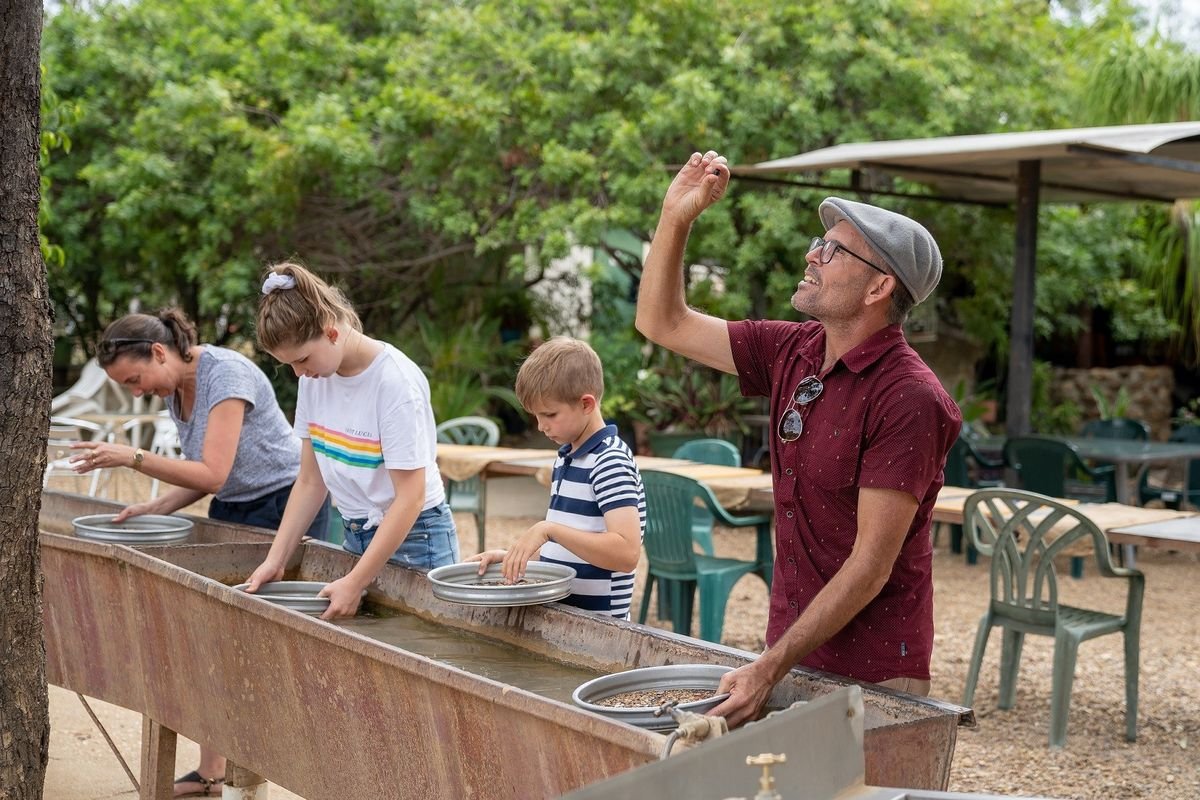
Basic equipment includes a small pick or geological hammer, sieves in various sizes, buckets, spray bottles (for revealing opal colours), and sturdy gloves. A magnifying glass helps examine finds more closely, which kids particularly enjoy.
Kid-Sized Equipment and Where to Find It
Many hardware stores stock smaller tools suitable for children. Lightweight plastic sieves and small hand trowels work perfectly for younger fossickers. Some fossicking locations hire child-appropriate equipment, so check before purchasing.
Clothing and Sun Protection Essentials
Dress children in lightweight, long-sleeved shirts and pants to protect from sun and scratches. Sturdy closed-toe shoes are essential—no thongs or sandals. Wide-brimmed hats and quality sunglasses complete the outfit.
Do You Need a Fossicking Licence for Children?
State-by-State Permit Requirements
Requirements vary between states. In New South Wales, a Fossicking Way Permit covers the licence holder and accompanying family members, including children. South Australia has similar arrangements. Always verify current requirements before your trip.
How to Apply for a Family Fossicking Licence
Licences can usually be obtained online through state government websites. Processing is typically quick, often same-day. Fees are reasonable, usually under $20 for individual permits. Keep your licence handy while fossicking—inspectors occasionally check.
How Much Does an Opal Fossicking Trip Cost?
Entry Fees and Licence Costs
Licence fees range from free to approximately $50 depending on the state and permit type. Tourist mines and fossicking parks charge entry fees, typically $15-30 per person. Family packages often provide better value.
Budgeting for Accommodation and Travel
Accommodation in opal towns ranges from camping (around $25-40 per night) to motels ($80-150 per night). Unique options like underground accommodation in Coober Pedy add to the experience but cost more. Factor in fuel costs, as these towns are remote.
Can You Actually Find Real Opals While Fossicking?
Managing Expectations with Children
Honesty helps prevent disappointment. While finding opal is possible, significant discoveries are rare. Focus on the adventure and learning experience rather than valuable finds. That said, many families do find small opals—enough to mount in jewellery or keep as treasured souvenirs.
What Happens If Your Child Finds an Opal?
Any opal found while fossicking legally belongs to you. Local jewellers can assess and potentially cut and polish finds. Even tiny pieces make meaningful keepsakes, reminding children of their outback adventure for years to come.
Tips for Making Opal Fossicking Fun and Educational
Turning the Experience into a Learning Opportunity
Opal fossicking naturally incorporates geology, Australian history, and Indigenous culture. Before your trip, research how opals form and the region’s mining history. Many towns have excellent museums that provide context.
Games and Activities to Keep Kids Motivated
Create friendly competitions between family members. Set mini-challenges like finding the most colourful rock or the strangest-shaped stone. Bring field guides to identify different minerals and fossils.
Creating Lasting Memories Through Fossicking
Opal fossicking offers families an adventure unlike any other. It combines outdoor exploration, genuine treasure hunting, and meaningful learning opportunities in some of Australia’s most unique landscapes. The shared experience of searching through ancient earth creates bonds and memories that endure. For families looking for opal fossicking for kids, it is a wonderful way to introduce children to Australia’s fascinating opal-mining heritage while enjoying an exciting outdoor activity together.
Preparation is key to success. Understand the safety requirements, pack appropriate gear, and manage expectations realistically. The outback environment demands respect, but rewards those who come prepared with unforgettable experiences.
Whether your children find opals or simply enjoy the thrill of the search, fossicking trips create stories they’ll tell for years. There’s something profoundly satisfying about connecting with Australia’s geological heritage while spending quality time together as a family. So why not start planning your adventure today?