
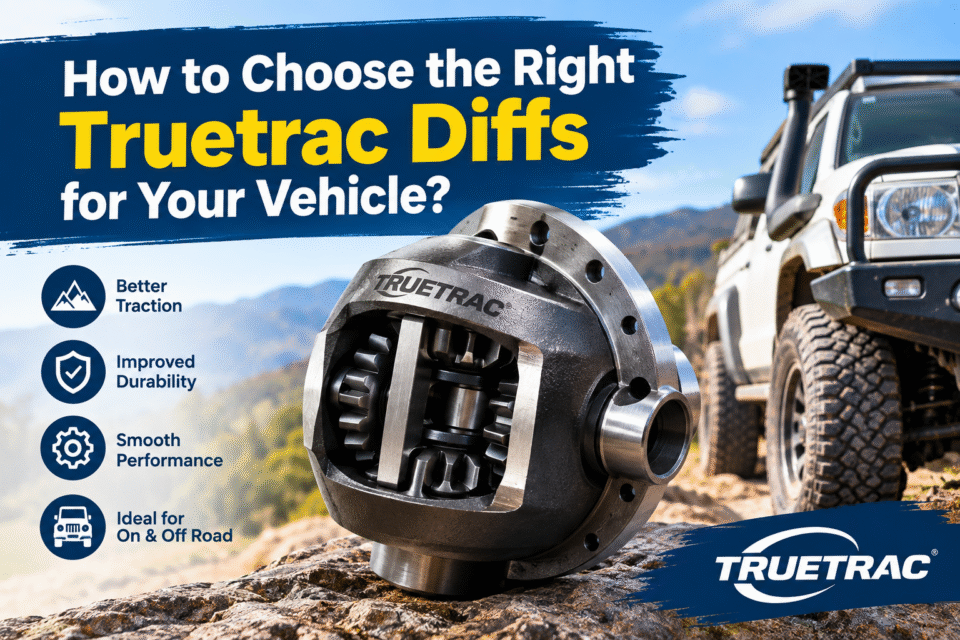
Ever found yourself spinning a wheel in sand while the other one sits there doing nothing? Frustrated by that lack of grip when you’re towing a heavy load up a steep driveway? Or perhaps you’re wondering why your mate’s ute seems to handle off-road tracks with ease while yours struggles? These are the exact moments when your differential choice truly matters.
Choosing the right Truetrac differential can transform your vehicle’s performance, whether you’re tackling the Victorian High Country, navigating beach sand in Queensland, or simply wanting better traction on wet roads. It’s one of those upgrades that makes a genuine difference to how your vehicle handles power delivery and maintains grip in challenging conditions.
In this guide, we’ll walk you through everything you need to know about selecting the perfect Truetrac diff for your setup. From understanding how these clever units work to figuring out the right size for your axle, comparing them to lockers, and avoiding common buying mistakes—we’ve got you covered. By the end, you’ll have the confidence to make an informed decision that suits your driving needs and budget.
What Is a Truetrac Differential and How Does It Work?
The Basics of Limited-Slip Differential Technology
A Truetrac differential is a type of limited-slip differential (LSD) manufactured by Eaton. Unlike your standard open diff, which sends power to the wheel with the least resistance (often the one spinning uselessly in mud), a Truetrac uses a helical gear design to transfer torque to the wheel with the most grip.
The beauty of this system lies in its purely mechanical operation. There are no clutches to wear out, no electronics to fail, and no buttons to press. The helical gears work automatically, sensing differences in wheel speed and redirecting torque accordingly. This makes it incredibly reliable and virtually maintenance-free.
Truetrac vs Open Differentials: Key Differences
Open differentials are standard equipment on most vehicles. They work fine on smooth, dry roads but fall short when traction becomes uneven. The moment one wheel loses grip, all your engine power goes to that spinning wheel while the other sits idle.
A Truetrac changes this dynamic entirely. When it detects a wheel losing traction, it automatically biases torque to the wheel that can actually use it. This happens smoothly and progressively, making it ideal for everyday driving as well as off-road adventures.
How Truetrac Compares to Other LSD Types
Compared to clutch-type LSDs, Truetrac diffs offer superior longevity because there are no friction plates to wear. They’re also quieter and require no special additives in your gear oil. However, they don’t provide 100% lock-up like a traditional locker, which we’ll explore later.
.jpg)
What Are the Benefits of a Truetrac Differential?
Improved Traction in Everyday Driving
You don’t need to be an off-road enthusiast to appreciate a Truetrac. On wet roads, gravel driveways, or even just pulling out of a car park with one wheel on a slippery surface, you’ll notice improved grip and stability. This translates to safer, more confident driving year-round.
Enhanced Off-Road Performance
For those who love weekend adventures, a Truetrac provides a noticeable improvement over an open diff. While it won’t get you through everything a full locker would, it handles most moderate off-road situations brilliantly. Climbing loose surfaces, tackling muddy tracks, and navigating uneven terrain becomes much easier.
Durability and Low Maintenance Requirements
One of the biggest drawcards is reliability. With no wearing parts, a Truetrac can last the life of your vehicle if properly installed. Just use quality gear oil, and you’re sorted. This makes it a cost-effective long-term investment.
Is a Truetrac Differential Worth It for Your Vehicle?
Assessing Your Driving Needs and Habits
Before spending your hard-earned money, consider how you actually use your vehicle. Do you regularly encounter low-traction situations? Are you towing frequently? Do you venture off-road, even occasionally? If you answered yes to any of these, a Truetrac is likely worth the investment.
On-Road vs Off-Road Considerations
For predominantly on-road driving with occasional light off-road use, a Truetrac is often the perfect middle ground. It provides improved traction without the compromises of a full locker, such as increased tyre wear or the characteristic clicking sound when turning.
Towing and Load-Carrying Requirements
Heavy towing puts extra strain on your drivetrain, and having consistent power delivery to both wheels makes a real difference. Whether you’re pulling a caravan, boat, or loaded trailer, a Truetrac helps maintain traction when accelerating from stops or climbing hills.
Which Vehicles Are Compatible with Truetrac Differentials?
Popular 4WD and Ute Applications in Australia
Truetrac differentials are available for most popular Australian 4WDs and utes. Toyota LandCruisers, HiLux, Ford Rangers, Nissan Patrols and Navaras, Isuzu D-Max, and Mitsubishi Tritons all have compatible options. The key is matching the correct unit to your specific axle.
Understanding Axle Specifications and Spline Counts
Your vehicle’s axle type determines which Truetrac you need. Spline count (the number of grooves on your axle shafts) is critical—getting this wrong means your new diff simply won’t fit. Common counts include 30, 31, and 32 splines, depending on your vehicle and axle configuration.
Front vs Rear Differential Installation Options
Most owners fit a Truetrac to the rear axle first, as this provides the biggest improvement for everyday driving. Front installations are possible on many vehicles but require more consideration around steering feel and wear patterns.
How Do I Know What Size Differential I Need?
Identifying Your Axle Type and Ring Gear Size
Ring gear size is measured in inches and directly determines which Truetrac fits your vehicle. Common sizes include 8-inch, 9-inch, and 10.5-inch variants. You can often find this information on diff-specific forums or by physically measuring your existing ring gear.
Checking Your Vehicle’s VIN and Build Specifications
Your vehicle identification number (VIN) can reveal factory specifications, including axle ratios and diff types. Contacting your vehicle manufacturer or a specialist supplier with your VIN often provides the quickest answer.
Common Differential Sizes for Australian Vehicles
Toyota HiLux commonly uses 8-inch diffs, while 200 Series LandCruisers often feature 9.5-inch units. Ford Rangers typically run 8.8-inch differentials. Knowing your specific model year is essential, as manufacturers sometimes change specifications between generations.
Truetrac Differential Price: What Should You Expect to Pay?
Factors That Affect Overall Pricing
Your vehicle’s popularity affects parts availability and pricing. More common vehicles often have better prices due to higher production volumes. Additionally, if your existing bearings or seals need replacing during installation, costs will increase.
Is It Cheaper to Buy a Truetrac Diff Online?
Online retailers often offer competitive pricing, but make sure you’re purchasing genuine Eaton products. Factor in shipping costs and confirm the unit is correct for your vehicle before ordering. Some workshops prefer you purchase through them to guarantee compatibility.
Truetrac vs Locker: Which Is Better for Your Needs?
Understanding the Functional Differences
A Truetrac biases torque progressively—it won’t provide 100% lock-up if one wheel is completely airborne. A locker, whether automatic or selectable, physically locks both wheels together, ensuring equal power delivery regardless of traction.
Best Choice for Australian 4WD Touring
For general touring around Australia—think beach driving, outback tracks, and national park adventures—a Truetrac in the rear combined with a selectable locker in the front offers excellent versatility. This setup handles most situations while maintaining good on-road manners.
Street Performance and Daily Driving Scenarios
If your vehicle doubles as a daily driver, a Truetrac’s seamless operation is hard to beat. Unlike lockers, there’s no clunking, no tyre wear issues, and no special techniques required. It simply works in the background, improving traction when needed.
Common Mistakes to Avoid When Choosing a Truetrac Diff
Buying the Wrong Spline Count or Ratio
This is the most common error. Double-check your spline count and confirm your gear ratio before purchasing. A mismatched Truetrac either won’t fit or will cause premature failure. When in doubt, consult a specialist.
Overlooking Gear Oil Requirements
Truetrac diffs don’t require special friction-modifier additives like clutch-type LSDs, but they do need quality gear oil. Use the correct viscosity for your climate and application. Cheap oil isn’t worth the risk to your new investment.
Ignoring Warranty and Quality Considerations
Genuine Eaton Truetrac units come with solid warranty coverage. Avoid suspiciously cheap alternatives—counterfeit and inferior products exist in the market. Purchase from reputable suppliers who can verify authenticity.
.jpg)
Where to Buy Truetrac Differentials in Australia?
Reputable Suppliers and Stockists
Established 4WD shops, specialist diff suppliers, and authorised Eaton distributors are your safest options. Names like ARB, Marks 4WD, and various state-based specialists carry genuine products and offer expert advice.
What to Look for When Buying Online?
Check seller reviews, confirm return policies, and verify you’re getting a genuine Eaton product with full warranty. Avoid marketplaces where authenticity can’t be guaranteed.
Conclusion: Making the Right Choice for Your Setup
Selecting the right truetrac diffs Melbourne doesn’t need to be overwhelming. By understanding your vehicle’s specifications, honestly assessing your driving needs, and purchasing from reputable suppliers, you’ll end up with an upgrade that genuinely improves your vehicle’s capability.
For most Australian drivers who want better traction without the compromises of a full locker, a Truetrac offers the ideal balance. It’s reliable, effective, and requires virtually no ongoing attention once installed. Whether you’re tackling weekend tracks or simply want more confidence in slippery conditions, it’s an investment that pays dividends.
Take your time with the research, don’t rush the purchase, and consider professional installation if you’re not confident with diff work. Your future self—stuck less often and grinning more—will thank you for making the right choice.