
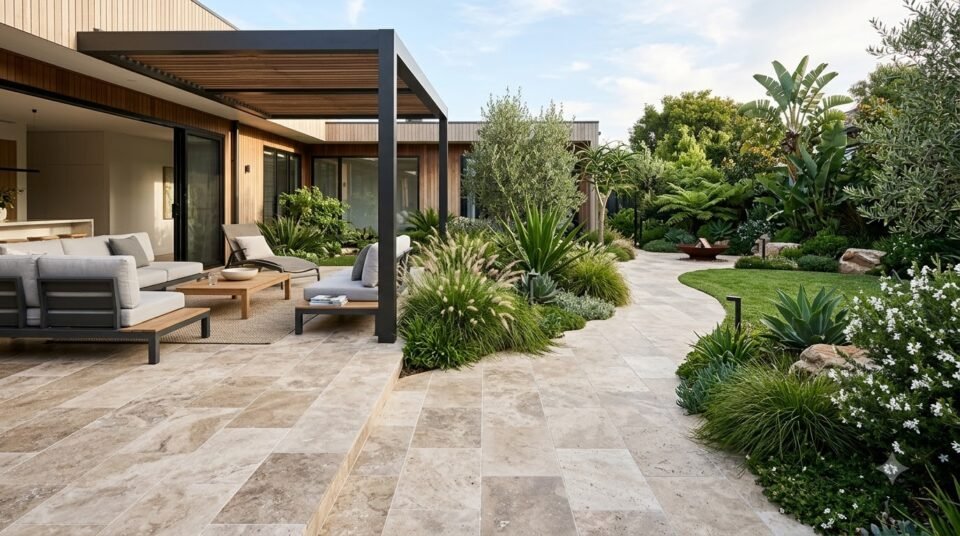
Travertine pavers have become a popular choice for Australian homeowners who want a beautiful and comfortable outdoor space. The natural stone is cool underfoot in summer, warm in winter, and offers a slip-resistant surface when wet. Because the material is porous, it can absorb a little moisture, which helps to keep the surface from becoming icy during cold snaps. In addition, travertine pavers are easy to cut into different shapes, allowing you to create patterns that match the style of your home and garden.
Seasonal Performance of Travertine Pavers
Australia’s climate ranges from tropical north to temperate south, and travertine pavers adapt well to these conditions. In the summer months, the stone’s natural coolness makes it pleasant to walk on barefoot, reducing the need for artificial cooling. During winter, especially in southern states where temperatures can dip below 0 °C, the pavers retain a gentle warmth that makes outdoor gatherings more enjoyable. When rain falls, the textured surface provides grip, helping to prevent slips on wet decks or pathways.
Summer Comfort
- Heat-reflective colour tones such as ivory and light beige bounce sunlight away.
- Cool surface temperature encourages barefoot use and reduces the need for outdoor rugs.
- Easy to hose down after a BBQ, keeping dust and pollen at bay.
Winter Warmth
- Travertine’s density stores daytime heat and releases it slowly after sunset.
- When sealed, the surface stays slightly warmer than unsealed concrete.
- In regions with occasional frost, the stone’s low water absorption reduces ice formation.
Rainy Day Grip
- Natural pits and veins create a textured surface that improves traction.
- Compliance with Australian slip-resistance standards (AS 4586) is easy to achieve.
- Water drains quickly through the joints, preventing puddles.
Design Options and Installation Tips
Designing a patio, pool deck, or garden path with travertine pavers gives you flexibility to match any architectural style. You can choose from rectangular, square, or irregular “random” shapes. Patterns such as herringbone, basket weave, or simple running bond add visual interest and can be tailored to the size of your outdoor area. When planning the installation, consider the base material, drainage, and edge restraints to ensure a long-lasting surface.
Choosing the Right Layout
- Herringbone: Adds a classic look and helps distribute weight evenly.
- Running bond: Simple to install and works well for large rectangular areas.
- Random pattern: Mimics natural stone and hides minor imperfections.
Preparing the Sub-base
A solid sub-base is essential for any paving project. In Australia, the typical recommendation is a 100 mm compacted crushed stone layer, followed by a 25 mm sand bedding. This combination provides stability, drainage, and a level surface for the travertine pavers. Make sure the base is sloped at least 1-2 % away from structures to direct water runoff.
Sealing and Edge Restraints
- Use a breathable, water-repellent sealant to protect against stains and UV fading.
- Edge restraints such as concrete curbs or metal frames keep the pavers from shifting.
- Regularly check joints for sand loss and refill as needed.
Geo-Specific Considerations for Australian Homeowners
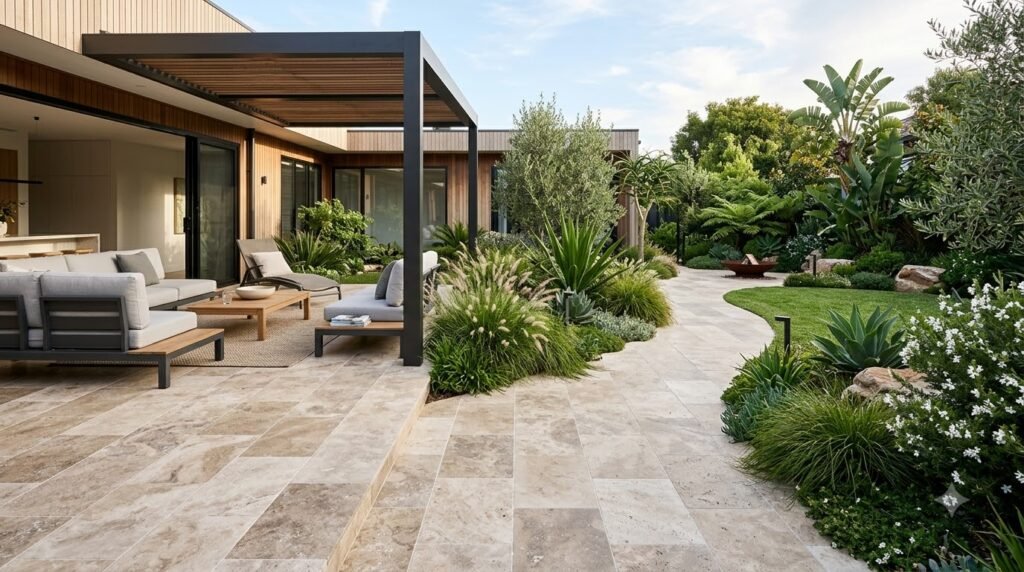
Each Australian state and territory has its own building codes and climate challenges. When installing travertine pavers, it’s important to be aware of local regulations, recommended suppliers, and common competitors. Below is a quick guide to help you navigate these factors in the major regions of Australia.
New South Wales (NSW)
- Regulations: Follow the NSW Development Control Plan for outdoor spaces, which emphasizes slip resistance and drainage.
- Suppliers: Local distributors such as Stoneware NSW and Australian Stone Supply offer a range of travertine colours.
- Competitors: Concrete pavers and timber decking are popular alternatives, but travertine wins on durability and heat resistance.
Victoria (VIC)
- Regulations: The Victorian Building Authority requires compliance with AS 4586 for slip resistance in public and private decks.
- Suppliers: Melbourne-based firms like Travertine Direct and Stone & Tile provide fast delivery.
- Competitors: Porcelain tiles are gaining market share, yet travertine remains favoured for its natural feel.
Queensland (QLD)
- Regulations: In coastal areas, ensure the pavers are rated for high UV exposure and salt-air resistance.
- Suppliers: Companies such as Queensland Stoneworks and Sunstone Supply stock UV-stable travertine.
- Competitors: Composite decking is common, but travertine offers better cooling under the Queensland sun.
Western Australia (WA)
- Regulations: The Building Code of Australia (BCA) mandates proper drainage for outdoor hard-scape.
- Suppliers: Perth’s Stone Solutions and WA Stone Market provide locally sourced travertine.
- Competitors: Sandstone pavers are a local favourite, yet travertine’s smoother finish is often preferred for modern designs.
South Australia (SA) & Tasmania (TAS)
- Regulations: Both states require compliance with the national slip-resistance standard and encourage the use of sustainable materials.
- Suppliers: Adelaide Stone works and Tasmanian Stone Supply carry a variety of travertine options.
- Competitors: Brick pavers are widely used, but travertine provides a cooler surface for summer outdoor living.
Maintenance Guide for Longevity
Keeping travertine pavers in top condition is straightforward. Regular sweeping removes debris that can cause staining. A gentle wash with a garden hose or a low-pressure washer clears dust and pollen. For deeper cleaning, a mild detergent mixed with warm water works well. Sealing the pavers every 12-18 months protects against oil, wine, and UV damage, especially in sunny Australian climates.
Seasonal Care Checklist
- Summer: Rinse after BBQs, check for algae in shaded areas, and reseal if the surface feels dry.
- Autumn: Remove fallen leaves promptly to prevent moisture retention.
- Winter: In southern regions, clear any ice gently with a plastic scraper; avoid metal tools that can scratch the stone.
- Spring: Inspect joints for sand loss and refill as needed.
Cost-Saving Tips
- Buy in bulk to secure a volume discount from local suppliers.
- Choose a simple running bond pattern, which reduces cutting time.
- Do the site preparation yourself if you have the tools and experience.
- Schedule installation during the cooler months to avoid weather delays.
Environmental Impact and Sustainability
Travertine is a natural stone that can be sourced responsibly. Many Australian suppliers now offer travertine that is quarried with low-impact methods and shipped using consolidated freight to reduce carbon emissions. By choosing a long-lasting material, you also minimise the need for replacement, which further lowers the environmental footprint of your outdoor project.
Eco-Friendly Practices
- Select locally quarried travertine to cut transportation distance.
- Use a water-based sealant that contains no harmful solvents.
- Recycle leftover stone pieces as garden edging or stepping stones.
Questions and Answers: Common Questions About travertine pavers in Australia
Below are answers to some of the most frequently asked questions by Australian homeowners considering travertine pavers for their outdoor areas.
Q: What is the best colour of travertine pavers for a hot Australian summer?
A: Lighter shades such as ivory, cream, and soft beige reflect more sunlight and stay cooler underfoot. These colours also blend well with native landscaping and coastal settings.
Q: Do travertine pavers need to be sealed in a high-UV environment?
A: Yes. Sealing helps protect the stone from UV-induced fading and makes it easier to clean. A breathable, water-repellent sealant applied every 12-18 months is recommended for most Australian climates.
Q: Are travertine pavers compliant with Australian slip-resistance standards?
A: When installed with a textured finish and proper joint spacing, travertine pavers meet AS 4586 requirements for slip resistance. Always check the product specifications and ask the supplier for compliance documentation.
Conclusion: Your Path to a Successful travertine paver in Australia
Travertine pavers offer a blend of comfort, durability, and style that works well across Australia’s varied climates. By understanding local regulations, selecting reputable suppliers, and following proper installation and maintenance practices, you can create an outdoor space that stays cool in summer, warm in winter, and safe in rain. Start by measuring your area, choosing a colour and pattern that suits your home, and planning a solid sub-base. Then, source the pavers from a trusted Australian distributor, apply a quality sealant, and enjoy a beautiful, low-maintenance surface for years to come. With careful planning and the right partners, your travertine paver project will enhance your home’s value and provide a comfortable outdoor retreat in every season.