
A backyard wellness space works best when it doesn’t feel bolted onto the rest of the garden. The most successful ones read as a natural extension of the home, somewhere that fits the existing layout rather than competing with it. Getting there is less about big structural changes and more about a handful of decisions around zoning, privacy, planting and the details that make a space feel considered.
Creating zones
Most backyards work better when they’re broken into a few distinct areas rather than treated as one open expanse that has to do everything at once. A wellness zone doesn’t need to be large to work, but it benefits from a clear boundary, whether that’s a change in surface material from lawn to gravel, a low hedge, or simply a step down from the main level of the yard, that signals to anyone standing there that it’s a different kind of space to the entertaining area or the kids’ play equipment nearby. Keeping it slightly separate from high-traffic parts of the yard, the path to the clothesline, the route to the side gate, helps it actually feel like a retreat rather than just another patch of garden that happens to have a bench in it.
Privacy
Privacy is what allows a wellness space to feel genuinely relaxing rather than exposed. Fencing solves part of this, but screening plants, a timber slat panel, or a simple pergola with something climbing over it does more for atmosphere than a plain boundary fence. Even partial screening, enough to soften sightlines from neighbouring windows or a shared driveway, can change how comfortable a space feels to actually use.
Planting
Planting ties a wellness zone back into the rest of the garden while also doing a lot of the privacy work without needing a solid fence. Layered planting, taller screening at the back, mid-height shrubs in the middle, something low and textural near seating or paths, gives the space visual depth rather than a flat, single-height garden bed that reads as an afterthought. Choosing species suited to the local climate keeps maintenance manageable over the years rather than turning into a constant watering and pruning commitment, and a bit of fragrant planting near seating, rosemary, jasmine, a native mint bush, adds another sense to the space beyond what it simply looks like.
Lighting
Lighting is one of the easier ways to make a wellness space feel intentional rather than an afterthought. Soft, low-level lighting, string lights overhead, small path lights, a single warm fixture near seating, reads as considered and calm, while a single bright floodlight reads as purely functional. If the space gets used in the evening, even occasionally, lighting is worth planning properly rather than relying on whatever spills over from the house.
Seating
Seating needs to be comfortable enough to actually sit in for a while. A simple bench, a couple of relaxed outdoor chairs, or a built-in timber seat along a screen all work, provided there’s somewhere for a drink and somewhere for feet that isn’t bare gravel. Positioning seating to face into the planting rather than back toward the house also helps reinforce that the space is its own thing, not just an extension of the patio.
Outdoor sauna
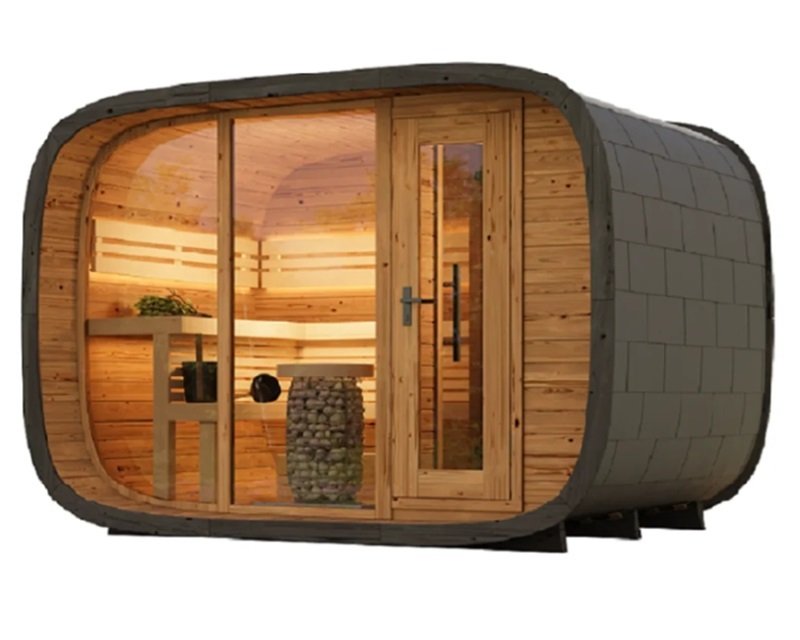
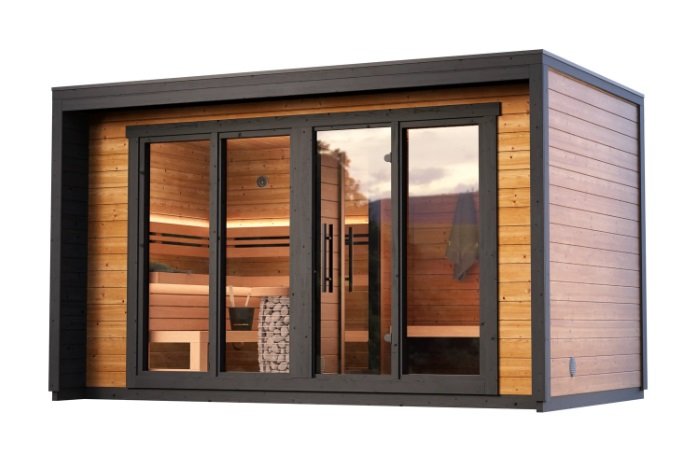
For a lot of homeowners, an outdoor sauna is what turns a nice sitting area into a genuine wellness space. It works best positioned as one element within the zone rather than as the dominant feature, tucked against existing screening or a fence line so it reads as part of the layout rather than a separate structure. Shym Saunas builds outdoor timber saunas designed to sit within exactly this kind of setup, complementing an existing garden rather than requiring the whole space to be redesigned around it.
Relaxation areas
Beyond the sauna itself, a small relaxation area nearby, somewhere to sit and cool down afterwards, adds a lot of practical value that’s easy to overlook at the planning stage. A simple daybed, a couple of loungers, or even a well-placed bench under some shade gives the space somewhere to unwind that isn’t the sauna itself, which matters if more than one person is likely to use it at a time. This is often the part that gets skipped in favour of the more obvious elements, sauna, seating, lighting, but it’s genuinely what makes the difference between a space that gets used briefly and one that gets used properly, session after session.
Practical maintenance
None of this is maintenance-free, and it’s worth planning for upkeep from the outset rather than treating it as an afterthought. Planting needs occasional trimming, decking benefits from an annual oil, and any timber structure, sauna included, needs periodic checks for weathering or movement. Looking through Shym Saunas’ range of outdoor saunas alongside the rest of the planned layout is a useful way to gauge how a particular size and finish will fit both practically and visually before committing to anything.
A backyard wellness space doesn’t need to happen all at once. Zoning and privacy can be sorted first, with planting, lighting and seating added as time allows, and something like an outdoor sauna included further down the track once the rest of the space has taken shape. Built up gradually, the result feels like it was always meant to be part of the home, rather than a project added on top of it.